Notice. New forum software under development. It's going to miss a few functions and look a bit ugly for a while, but I'm working on it full time now as the old forum was too unstable. Couple days, all good. If you notice any issues, please contact me.
CraziestOzzy Senior Member Joined: 11/07/2008 Location: AustraliaPosts: 156
Posted: 02:09am 02 Oct 2025
Copy link to clipboard
Print this post
Cheers and thanks for clearing that up. Those GTI's are indeed cheap secondhand. Have been looking myself an yeah, your right - virtually all I have looked at require higher DC voltages than my 24v system.
About 20 odd years ago when I was in Townsville, a bloke from this forum gave me his old broken inverter...huge toroid transformer and the electronics were top quality. It was designed to run on nominal voltage of 24v. I got flooded out and lost everything, so bound to be another out there :)http://cr4.globalspec.com/member?u=25757
http://www.instructables.com/member/OzzyRoo/
CraziestOzzy Senior Member Joined: 11/07/2008 Location: AustraliaPosts: 156
Posted: 02:22am 02 Oct 2025
Copy link to clipboard
Print this post
Thanks and good idea. Think you just swayed my mind back towards a continuos slab. I had designed the system in the start with that in mind...why I have four 32mm underground conduits ready to go to allow for future expansion. But then I thought I have these 2x2 foot 10cm slabs lying around and to use them. My old man's a sparkie...he said the same thing - don't forget to put the marker tape down and infill with sand before capping with cement!http://cr4.globalspec.com/member?u=25757
http://www.instructables.com/member/OzzyRoo/
CraziestOzzy Senior Member Joined: 11/07/2008 Location: AustraliaPosts: 156
Posted: 02:32am 02 Oct 2025
Copy link to clipboard
Print this post
True, I'm taking heaps of photos of progress, going as far as showing depth of holes dug for posts. Once everything ready to go, get a legit sparkie to sign it off even though I don't need one as it keeps the missus happy and the insurance company. Basically a permanent and dated record.
With the Standards set against the DIY end user, I do note that was has not changed is that when a new Standard comes in existing systems are allowed to exist as long as you can replace "like for like".
Going to have a sticky at your previous posts, but what was your solution to off grid with multiple redundancy?http://cr4.globalspec.com/member?u=25757
http://www.instructables.com/member/OzzyRoo/
KeepIS Guru Joined: 13/10/2014 Location: AustraliaPosts: 2284
Posted: 03:58am 02 Oct 2025
Copy link to clipboard
Print this post
The solution evolved over a few years from a small 12V system to keep a Fridge and Freezer running for just a few days, to a Powerful DIY Inverter [designed by forum member "wiseguy" with many members, especially "Poida" all contributing to the final Single or Dual power Inverter design].
This runs the entire Home and woodworking workshop completely off grid with no concern for power usage or how many appliances are running at once, all electric including 3.6kW Hot water system, a couple of fridge freezers, Stove, Oven, Air-conditioners, mains pressure water pumps etc, plus huge workshop machinery with startup loads of over 25KW surge, it can easily handle over 13kW of load for long periods, day and night.
The posts are a bit of a convoluted read as I tend to go off on tangents, my excuse is I'm getting old
Redundancy is 8 x 60A Solar regulators parallel switched, four Low voltage configuration high power panels per Regulator, separately switched parallel banks of high power LiFePO4 batteries, an Inverter built to allow a power module swap in under 10 minutes, fully running and tested spare modules and lastly, a spare smaller Inverter. The system is a nominal 48Vdc system.NANO:Inverter V 8.4ks - Linux AvrDude GUI script V4.1
CraziestOzzy Senior Member Joined: 11/07/2008 Location: AustraliaPosts: 156
Posted: 05:10am 02 Oct 2025
Copy link to clipboard
Print this post
Crikies, makes my creation look like a AAA battery Looked at a few of your posts, good reading that satisfied the monster in me. Big thumbs-up from me.
...looking at your circuit builds, made me think of my crazy days of tinkering with a TL494 chip to create a variable power supply with enough grunt to skin a cat. My program skills are limited to BASIC, old school - but will see a need for its use once I refine my system with extra unnecessary toys.http://cr4.globalspec.com/member?u=25757
http://www.instructables.com/member/OzzyRoo/
Revlac Guru Joined: 31/12/2016 Location: AustraliaPosts: 1309
Posted: 09:31am 03 Oct 2025
Copy link to clipboard
Print this post
When you build a solar system or anything on your house or land, you build it for yourself, don't build it for some potential buyer, if or when you have to sell the place, the buyer (new owner) will just throw it all out and do there own thing........we nearly all do this, we make the house etc our own. Depending on the location and circumstances they may just demolish the place and build a new house the way they want these days. Cheers Aaron Off The Grid
Boppa Guru Joined: 08/11/2016 Location: AustraliaPosts: 816
Posted: 06:20am 10 Oct 2025
Copy link to clipboard
Print this post
I ran a 12v system until recently (8kw 12v inverter- and thats not a misprint- 8000w at 12v...) but 48v is better for the big wattage inverters (now on a 12kw 48v Sigineer instead)
Use MPPT charge controllers on the panels- my older ones were 150vdc max from the panels (120v safe working voltage) to recharge the 12v 1600Ah battery bank- the newer ones are 250vDC max pv input (200v safe working limit)- this allows you to have long PV cable runs without needing a small copper mines annual output for the cables lol
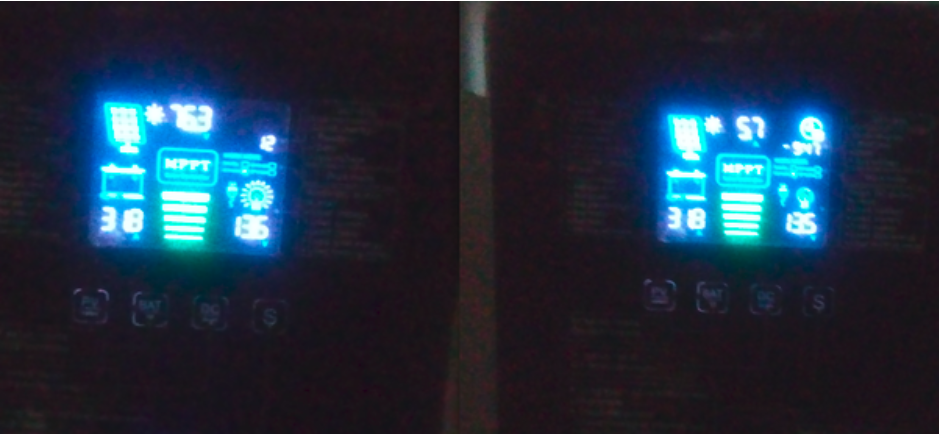
This was from the old 12v system... Thats putting 13.6v into the battery bank, at 31.8A, while the panels are running at 76.3v at a much smaller 5.7A....
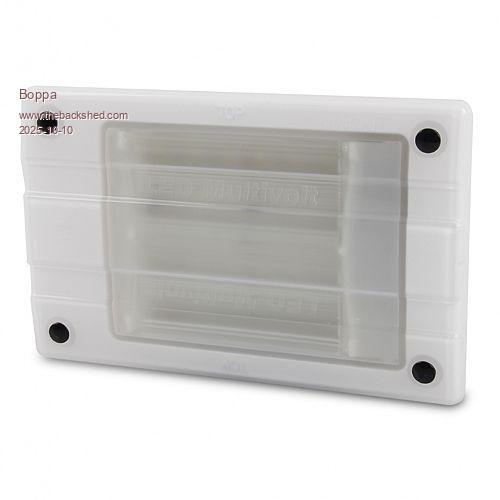
There are multivoltage LED bulbs readily available- either 12/24v automotive stuff for trucks (the old Hella reverse LED lamps are always popular 'room lights')
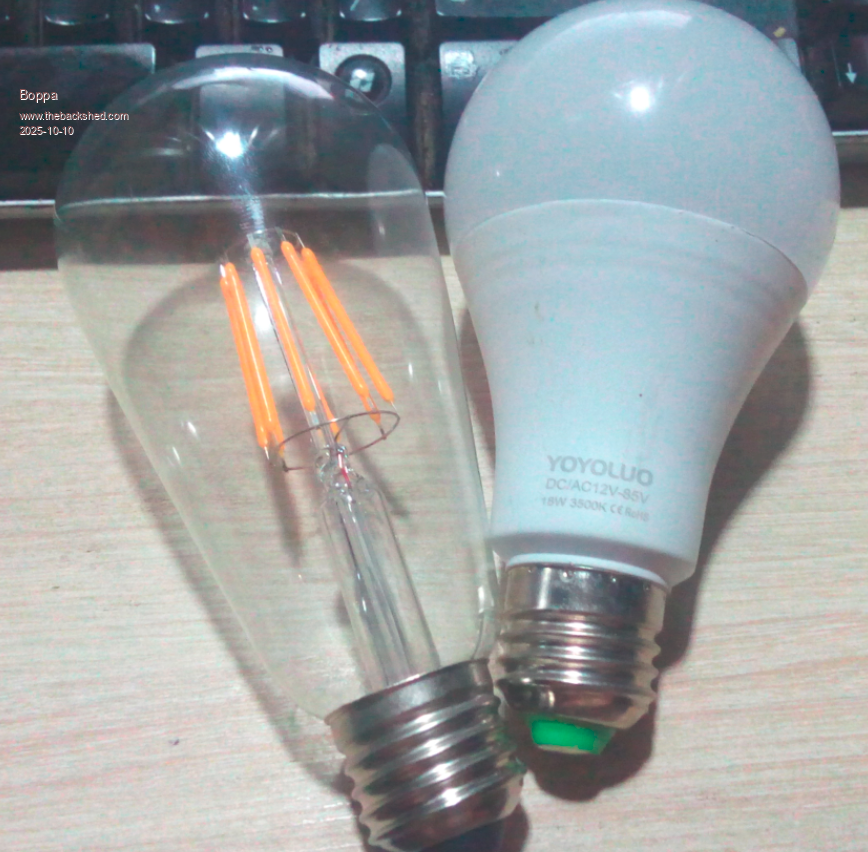
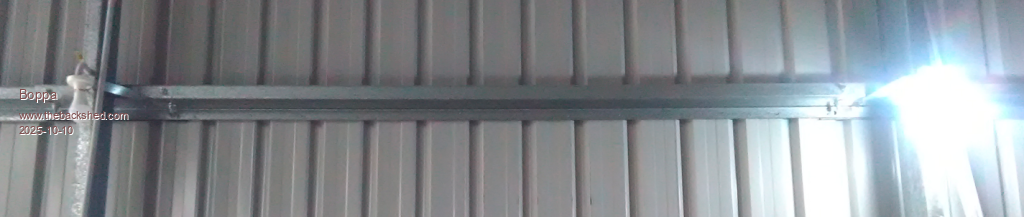
What I use are LED bulbs that fit standard ES light bases- so can be used in any 'mains' fitting- but running directly from the battery bank- these are actually cheaper in bulk than the mains versions from the local supermarket- stay the same brightness at any voltage from 12v up to 85v and can be run straight from the battery bank (be it 12v, 24v or 48v) These are readily available online, cheap as standard LED bulbs, and you can pick and choose the 'colour' rating and wattage- from the 'warm white' I use in the caravans interior lights to the 'cool blue' I use out in the shed itself-40w equivalent to 100w equivalent ....
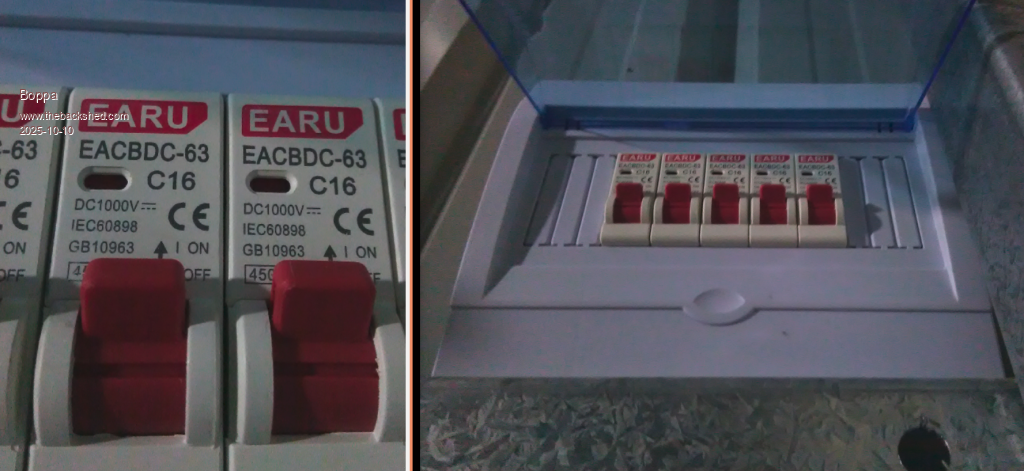
BTW a warning for people- do NOT use AC breakers on DC- even at voltages well under their ratings- they can (and almost certainly will over time) arc weld shut- not something you want to happen to the safety cutout!!!!- us DC rated breakers- again readily available
DC breakers have magnetic arc suppression or other similar systems for suppressing the DC arc that AC breakers do NOT have and also have a 'correct' direction of current flow marked for DC (dont hook them up backwards!!!!)- you can tell them because they will have the voltage marked as DC and the maximum voltage, plus they will have the DC marking (long bar over the dashed bars seen in the pic just to the right of the voltage rating) instead of the AC 'wavy bar' sinewave symbol....
CraziestOzzy Senior Member Joined: 11/07/2008 Location: AustraliaPosts: 156
Posted: 01:20am 18 Oct 2025
Copy link to clipboard
Print this post
"I ran a 12v system until recently (8kw 12v inverter- and thats not a misprint- 8000w at 12v" That's some serious stuff!
That's soem good ideas with using reverse LED truck lamps, didn't even think of that, so thanks.
"What I use are LED bulbs that fit standard ES light bases- so can be used in any 'mains' fitting- but running directly from the battery bank"
That's the way I went too (E27 base with ST58 and ST64 globes), for the lounge and kitchen anyway. Much more to choose from with respect to good looking hanging pendants etc available only for AC general house use.
"BTW a warning for people- do NOT use AC breakers on DC- even at voltages well under their ratings- they can (and almost certainly will over time) arc weld shut- not something you want to happen to the safety cutout!!!!- us DC rated breakers- again readily available"
Absolutely and good advice! I decided on non-polar DC breakers. Wanted one non-polar breaker for the link between MPPT and battery and decided to purchase direct and in bulk from manufacturer in China a set for whole system. I did find it dificult to source class B breakers and had to settle for the class C. Running only resistive loads I wanted the class B rather than the Class C that is best for surge/inductive loads...anyways, the fuse will break the curcuit before the MCB kicks in and decided to integrate the MCB's as a manual switch with the added benefit of having a circuit breaker in the mix.
Apologies for delay in reply, had a bushfire keeping us on edge for well over a week. Choppers dumping water used our house as a flight path to the fires, sirens going off as they past overhead every 20 minutes whenever the ground crew called them up.. Edited 2025-10-18 11:42 by CraziestOzzyhttp://cr4.globalspec.com/member?u=25757
http://www.instructables.com/member/OzzyRoo/
CraziestOzzy Senior Member Joined: 11/07/2008 Location: AustraliaPosts: 156
Posted: 02:14am 18 Oct 2025
Copy link to clipboard
Print this post
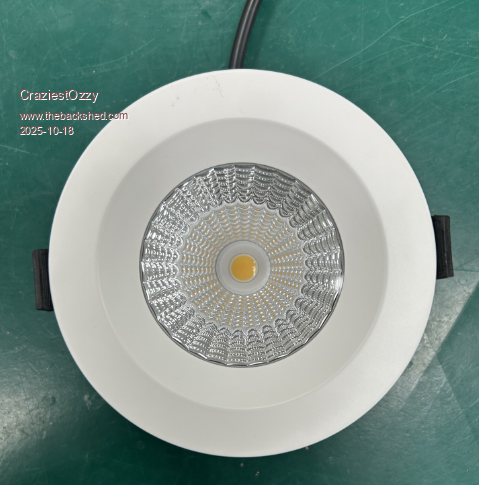
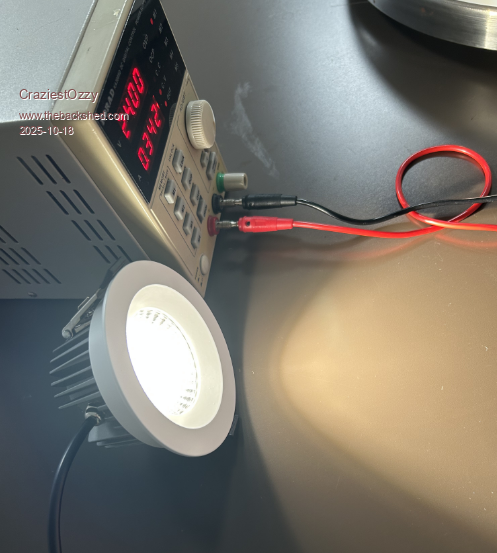
This is one of the 8W 24VDC IP65 COB led downlights, single colour (white) 4000k that I purchased, again direct from Chinese manufacturer to save $$$ Just a heads-up for anyone purchasing LED bulbs, if you want a globe rated for say 8W, make sure it is a single colour LED chip to get the full rated wattage. If you get a multi colour adjustable (RGB) or (cool/white/warm) globe you won't get the full 8W output...much less.
This particular light globe will run direct from a 24VDC battery without an LED driver. I have incuded a driver in the circuit leading to these globes to reduce heat output on the globe itself and to have a dimming function. When cranked to full brightness, the heat dissipation fins are barely warm thanks to the PWM drivers. A small current draw for such a high Lumen...surprisingly bright. My preference is for natural white, so am sticking to the 4000K to 4500K colour range which makes life difficult when sourcing DC LED globes. Edited 2025-10-18 12:18 by CraziestOzzyhttp://cr4.globalspec.com/member?u=25757
http://www.instructables.com/member/OzzyRoo/
CraziestOzzy Senior Member Joined: 11/07/2008 Location: AustraliaPosts: 156
Posted: 06:28am 10 Aug 2026
Copy link to clipboard
Print this post
G'day again. When it stops raining, I will go outside and take a few happy snaps of the (almost) completed and installed system. I now have installed so far, 5 lights to the home and some additional lighting to light the underneath of kitchen cabinets.
I have a big question to ask you guys and gals. I am wanting an electrician to come out and inspect the setup and certify that it has all been done in a safe and correct manner, meeting current Standards for low voltage work at 24vdc...which is not asking too much. I have had four sparkies so far decline.
So far, I have received only one answer as to why they won't do it:
"This is due to our responsibility for the systems we install and the requirements associated with certifying an installation that we have not carried out ourselves."
...it really does not take much to open two large electrical boxes, inspect the wiring and circuit and stick a head into the man hole in the ceiling.
ANyone have ideas on how I can get a sparkie to at least come out and inspect the current setup, without scaring them off with the wording, "for insurance purposes"?
My old man was a sparkie, he would often check and certify other peoples work, got me stuffed with this one.http://cr4.globalspec.com/member?u=25757
http://www.instructables.com/member/OzzyRoo/
Revlac Guru Joined: 31/12/2016 Location: AustraliaPosts: 1309
Posted: 10:02am 10 Aug 2026
Copy link to clipboard
Print this post
Hi, Well sounds like you have done some nice work, I had some fun with cob leds some time back. I'm not surprised that they don't want to inspect your setup and the excuse used. "DC systems under thresholds (like 50V AC / 120V DC) do not inherently require a licensed electrician unless tied to grid infrastructure"
For insurance, good luck for anyone offgrid after storm damage, insurance can take weeks or months to inspect on-grid solar, off-grid you may be dark for some time.......unless one is already prepared for it as we all should be. I will be doing some low voltage lighting in the shed eventually, personal view is ELV may be safer to have around in case of contact with body, however it is still just as capable of burning a house or equipment to ashes as typical house voltage.
I had another question that may tempt a sparky to turn up, but realise we cant bait them and might be trouble , so next idea.Cheers Aaron Off The Grid
CraziestOzzy Senior Member Joined: 11/07/2008 Location: AustraliaPosts: 156
Posted: 01:17am 14 Aug 2026
Copy link to clipboard
Print this post
Cheers Revlac, spoke to my old man, he reckons 20+ years ago, he said it was no problem signing off on other sparkies work as long as he wrote down and recorded what was checked off and drew a circuit diagram. Today he is retired, but said before he hung up his boots, he would not sign off on other sparkies work as too many dodgey operators and the risk of being sued. ANyways, I know my setup has enough protections in place and in my view, safer than the previous 240vac mains lighting. ...just annoying I can't get a sparkie just to check the work lolhttp://cr4.globalspec.com/member?u=25757
http://www.instructables.com/member/OzzyRoo/
Godoh Guru Joined: 26/09/2020 Location: AustraliaPosts: 712
Posted: 01:35am 14 Aug 2026
Copy link to clipboard
Print this post
I used to be a sparkie, the problem these days is like your dad said, lots of dodgy work that I would never have signed off on. Also the rules keep changing, inspectors make their own rules up, supply authorities interpret the rules in weird ways to suit themselves. In the end it has become a nightmare. So I would not have wanted to sign off on anyone elses work either. I saw so much non compliant subs standard work in my time working in the trade, that i only ever signed off on the work I did. It is just too risky when your livelihood depends on having a licence. I am so glad that I retired a long time ago and no longer have to keep up with the standards changing all the time.
Pete
CraziestOzzy Senior Member Joined: 11/07/2008 Location: AustraliaPosts: 156
Posted: 01:59am 14 Aug 2026
Copy link to clipboard
Print this post
This is an update showing the progress and changes made since the start of this project:
Changed the 12v panels to 24v panels. Redesigned the framework from a horizontal panel to an angled panel that points panel surface better to the sun in Winter and to support the larger 24v panels. Cut off al MC4 connectors and enclosed the rewired connections inside junction boxes. Added another ABS plastic electrical box, to enclose all the WiFi remote controllers for the lights. Repositioned the solar electrical box to under the solar panels, with a corrugated iron sheet overhead to protect box from rain.
Junction boxes under panels, hold the wiring that connects the panels to electrical box.
Conduit protects the soft silicon insulated wiring running from junction boxes to electrical box. Yet to secure the black cables from panels.
The revised frame structure, additional underground conduit for future expansion. Trench is shallow, due to all those bloody rocks.
I will add some 45 degree diagonal bracing to the vertical supports before the storm season. Sand filled bags ready to fill in the underground cable run.
Completed main electrical box. MPPT controller raised so the wiring behind the controller does not impede the heat sink. Negative/Positive inputs from solar panels all have ceramic sand filled fuses.
The electrical box under the house, with the DC/DC isolated controllers, fuses and switches. Have had to include an additional SPD (coloured purple) as the underground cable run is over 10m. Top right is a new addition, a 24v/12v isolated converter to run touch/dim lights under kitchen cabinets.
ABS plastic box under house, has the WiFi light controller. Each controller output controls one light and has a din rail fuse next to it valued to 500ma. Lights inside the house do not require wired wall switches as controlled remotely here. Yet to tidy the wiring and add another two din rails.http://cr4.globalspec.com/member?u=25757
http://www.instructables.com/member/OzzyRoo/
CraziestOzzy Senior Member Joined: 11/07/2008 Location: AustraliaPosts: 156
Posted: 02:16am 14 Aug 2026
Copy link to clipboard
Print this post
You summed it well here mate :) I have resigned myself to accepting the fact, that I think I have done the job right here and leave it at that http://cr4.globalspec.com/member?u=25757

 Notice. New forum software under development. It's going to miss a few functions and look a bit ugly for a while, but I'm working on it full time now as the old forum was too unstable. Couple days, all good. If you notice any issues, please contact me.


 Print this post


 , so next idea.
.jpg)
.jpg)
.jpg)
.jpg)
.jpg)
.jpg)
.jpg)